
Former Chinese Railway Minister Liu Zhijun was given a suspended death sentence July 8 for corruption, bribery and other abuses of power committed between 1986 and 2011, the year he was removed from office. The sentence, which usually means life imprisonment, comes after the March 2013 dissolution of the Ministry of Railways. The ministry's termination was part of a broader central government effort to consolidate control over key industries and ministries.
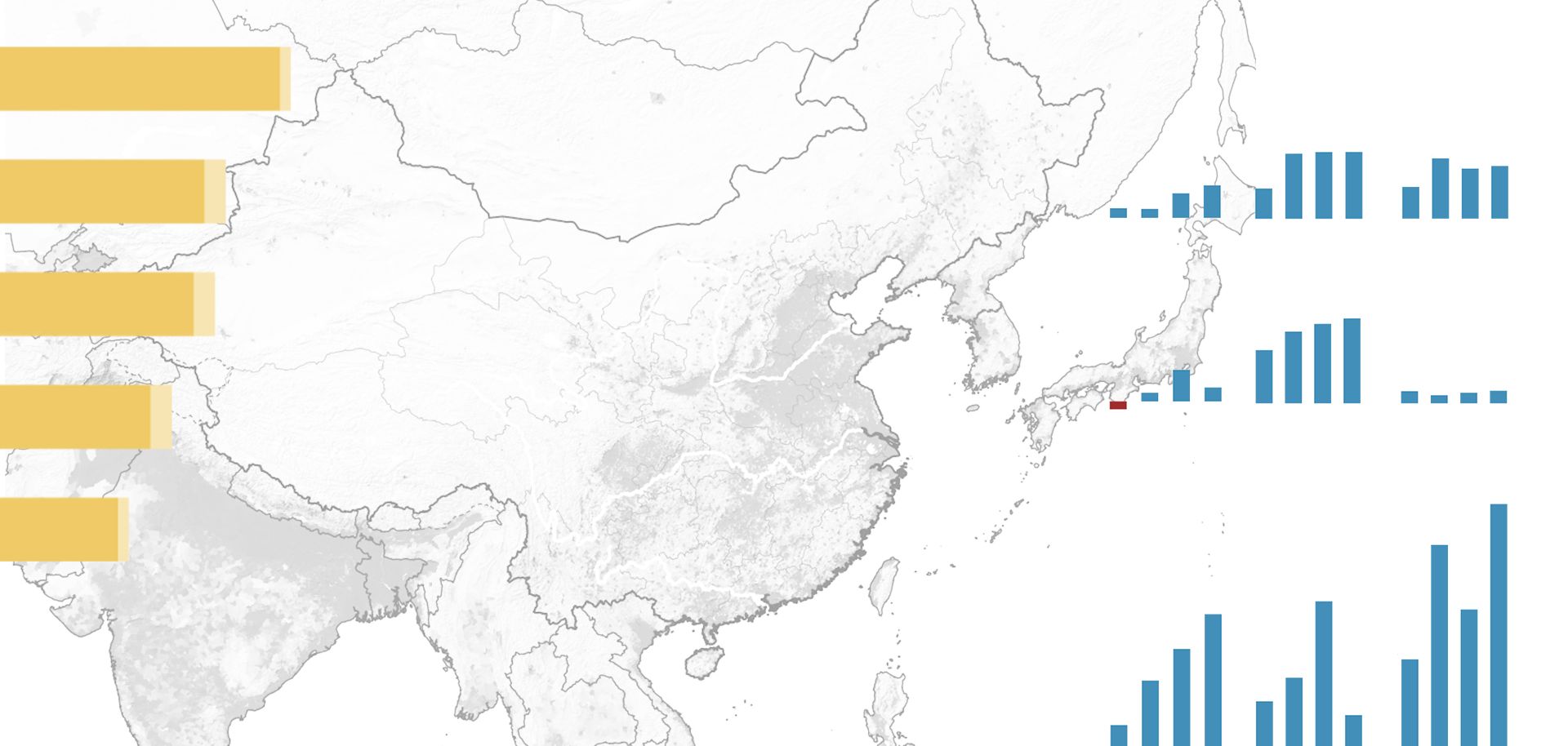
Under Liu, annual investment in the rail system grew nearly tenfold between 2003 and 2009, rising from 69.2 billion yuan to 623 billion yuan ($11.3 billion to $102 billion), focusing particularly on his prized high-speed passenger rail lines. In addition to flagship high-speed rail projects such as the Beijing-Shanghai line, which cost an estimated 221 billion yuan, Liu's tenure also saw the expansion of lines to China's strategic central regions and resource-rich but poorly integrated western "buffer regions," including Xinjiang, Inner Mongolia and Tibet. In this respect, Liu helped bring China one step closer to fulfilling one of the Communist Party's core geopolitical imperatives: integrating the country's disparate regions into a single national economic unit.
But as with many other key industries in China during the mid-2000s, the expansion of rail capacity led to enormous waste, overcapacity and soaring debt. This was exacerbated by the unusual political autonomy and lack of oversight Liu and the Ministry of Railways enjoyed. Liu's dominance over the largely autonomous Ministry of Railways throughout the 1990s and 2000s highlighted the central government's persistent challenge in attaining long-term institutional reform and consolidation in the face of deeply entrenched bureaucratic interests.