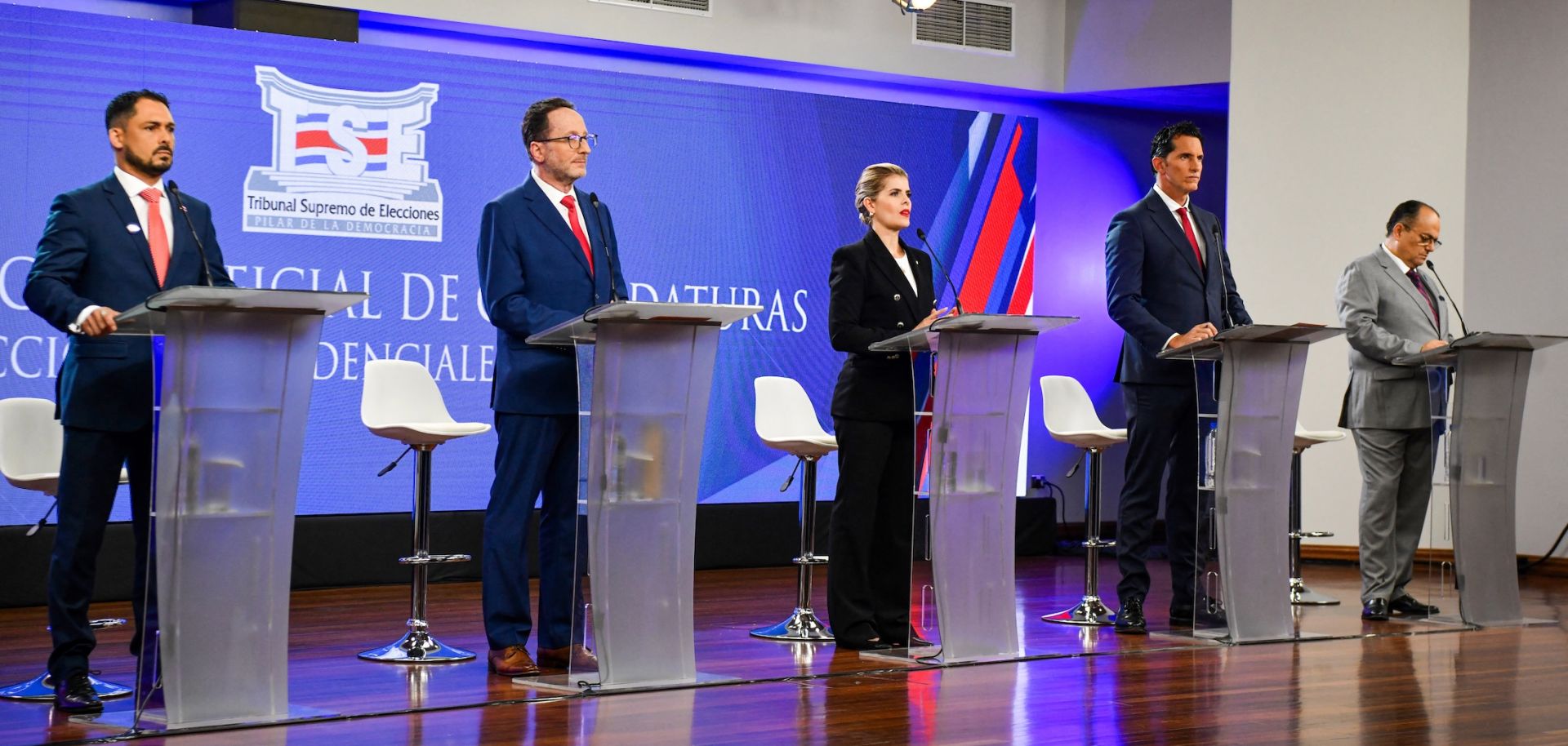
Despite surging crime levels and political tensions, Costa Rica's right wing will likely maintain its hold on the presidency following the Feb. 1 election, continuing efforts to boost economic performance, crack down on crime and strengthen relations with the United States. On Feb. 1, Costa Ricans will head to the polls to elect a new president, two vice presidents and all 57 members of the unicameral Legislative Assembly. The presidential election will advance to a second round on April 5 if no candidate secures at least 40% of the vote in the first round. The incumbent, President Rodrigo Chavez, is barred from seeking immediate reelection, as Costa Rica's Constitution requires an eight-year interval between presidential terms. The presidential race is crowded, with 20 candidates vying for the office. According to polling conducted by OPol on Jan. 2-5, Chaves' chosen successor, Laura Fernandez of the right-wing Sovereign People's Party (PPSO), appears...