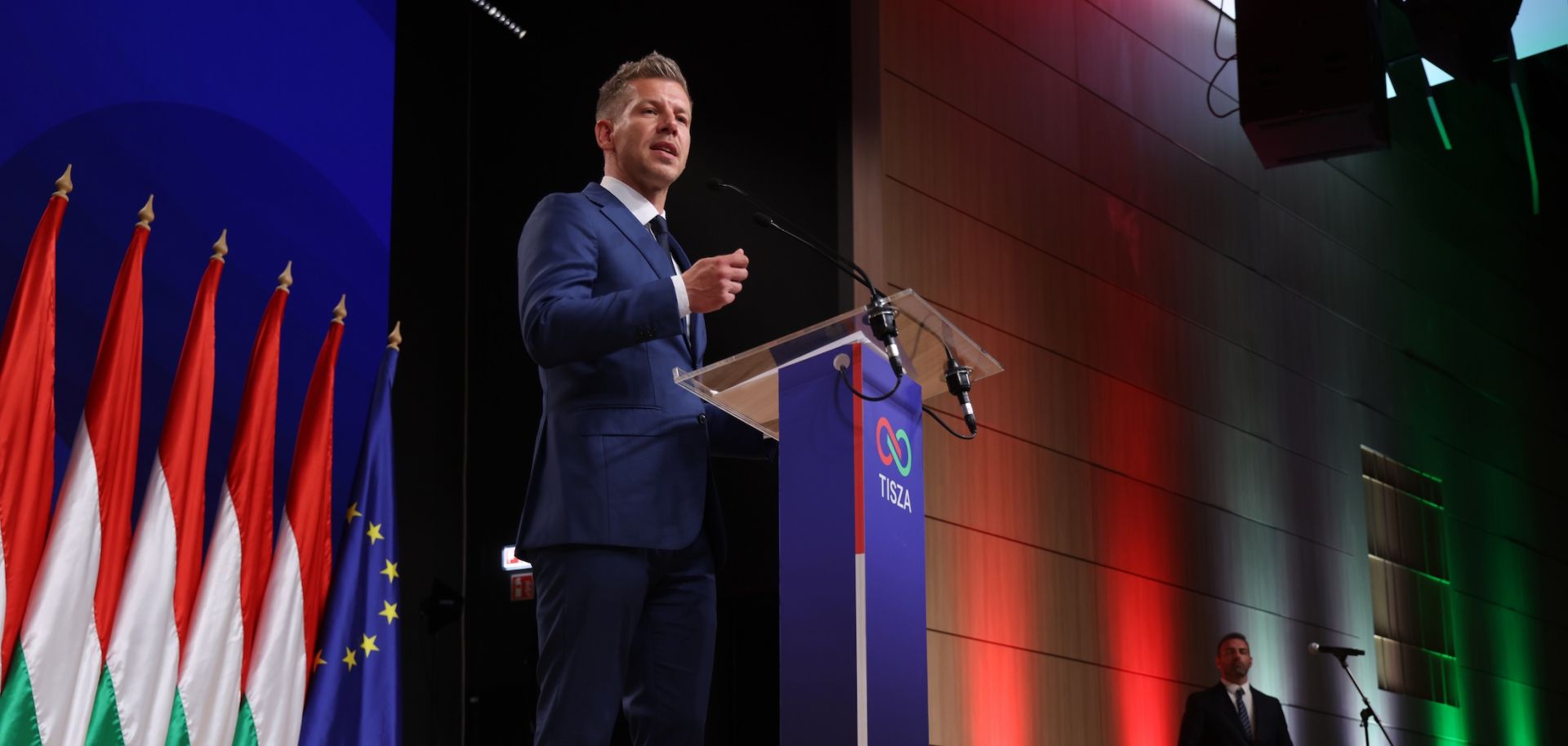
In Hungary, a landslide opposition victory will enable rule-of-law reforms and a shift back toward the European mainstream after 16 years of illiberal, eurosceptic governance, unlocking frozen EU funds and restoring constructive EU engagement; however, the new government will only gradually reduce dependence on Russian energy and converge selectively with Brussels on Ukraine policy, while facing significant fiscal constraints. Hungary's opposition leader Peter Magyar secured a decisive victory in the April 12 parliamentary elections, defeating Prime Minister Viktor Orban with a two-thirds supermajority that grants the incoming government the ability to amend the constitution and pursue sweeping institutional reforms. Propelled by a record-high voter turnout of 79.5%, Magyar's Tisza Party won 53.6% of the vote and 138 of 199 seats, while Orban's Fidesz secured only 37.9% and 55 seats. Orban conceded after it appeared the margin had become insurmountable, easing earlier concerns over a potential contested outcome. In his victory...