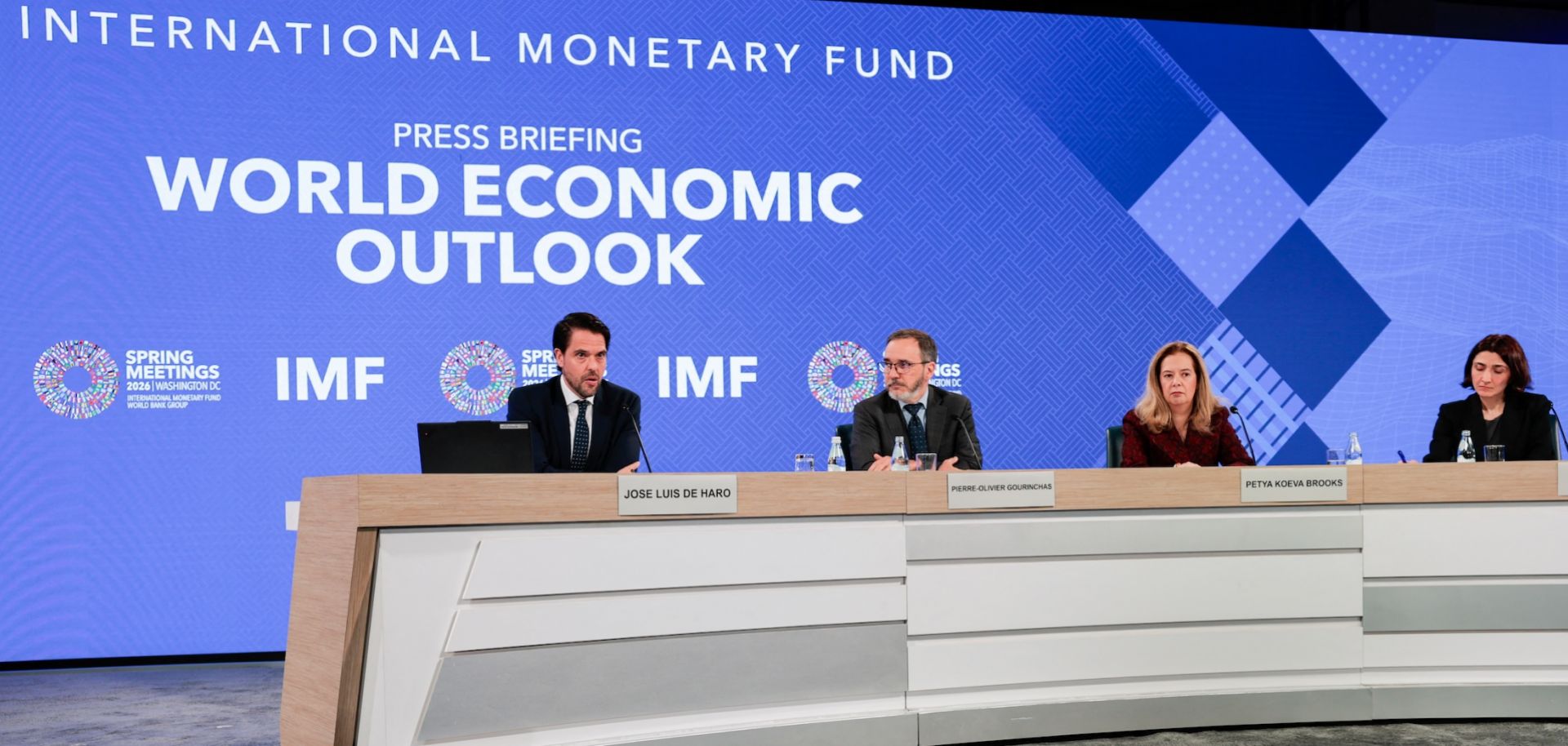
The Iran conflict is increasing global economic uncertainty and financial market volatility, most acutely harming financially weak, net energy-importing economies with low per capita incomes whose governments will face painful financial trade-offs, higher import and financing costs, and heightened unrest risks. On April 14, the International Monetary Fund (IMF) released an update to its biannual World Economic Outlook. Against the backdrop of the Iran war, the fund modestly downgraded its global growth forecast but also highlighted the risk of a global recession in the case of a prolonged conflict and long-lasting higher oil prices. The IMF's warning was the latest in a series of similar downgrades from multinational financial institutions, global banks and national authorities. The war has substantially increased global energy and fertilizer prices amid Iran's attacks on Gulf energy infrastructure and the effective closure of the Strait of Hormuz, which previously handled 20-25% of global oil exports, 20%...