
COLUMNS

Lessons From Trump’s Use of Force Abroad in His First Year Back in Office

Jan 8, 2026 | 23:08 GMT
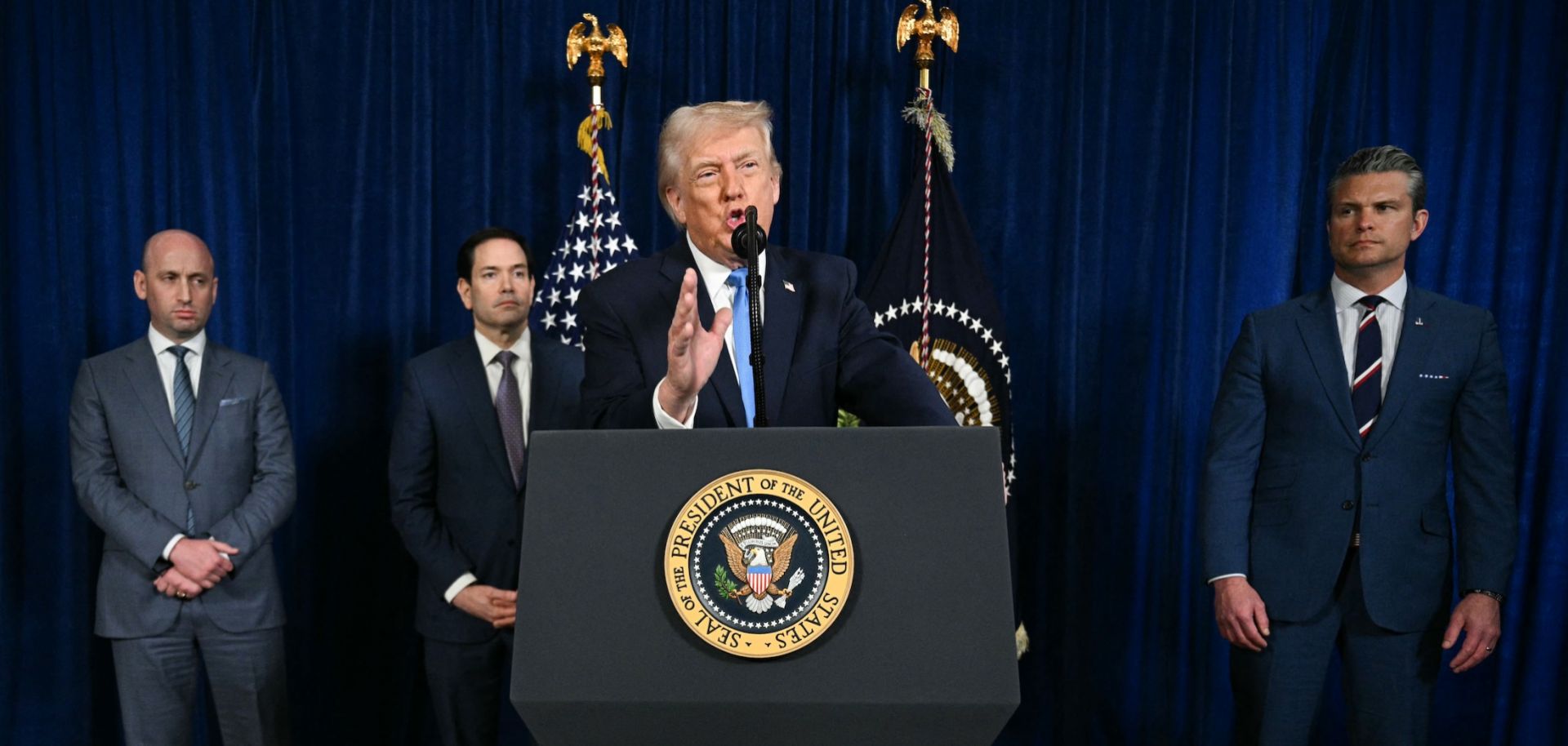
U.S. President Donald Trump, alongside (left to right) Deputy Chief of Staff Stephen Miller, Secretary of State Marco Rubio and Secretary of Defense Pete Hegseth, speaks to the press following U.S. military actions in Venezuela, at his Mar-a-Lago residence in Palm Beach, Florida, on Jan. 3, 2026.

(Jim WATSON / AFP via Getty Images)

In the first year of his second term, U.S. President Donald Trump vastly expanded the use of U.S. military force abroad, culminating in the successful Jan. 3 operation to remove Venezuelan President Nicolas Maduro. According to data from the Armed Conflict Location and Event Data Project, the Trump administration oversaw at least 626 airstrikes through the end of 2025 (a figure that does not include the Venezuela strikes), compared to the 555 strikes conducted during former President Joe Biden’s entire four-year term. This uptick in U.S. strikes around the world fits into Trump’s self-described “peace through strength” strategy, which frames aggressive actions abroad as crucial to supporting U.S. national security and political objectives. Although Trump routinely portrays himself as unpredictable -- which he considers an asset in foreign policy -- his use of force since returning to the White House reveals 10 overarching patterns....

Subscribe to view this article

Subscribe Now

Subscribe

Already have an account?