For more targeted results combine or exclude search terms by applying the Boolean Operators AND, OR and AND NOT. Place quotations around your search term to find documents that contain that exact phrase
Search Tools
AssessmentsDec 26, 2025 | 14:30 GMT

Oman and New Zealand Deals Indicate India's Push To Diversify Trade Partnerships
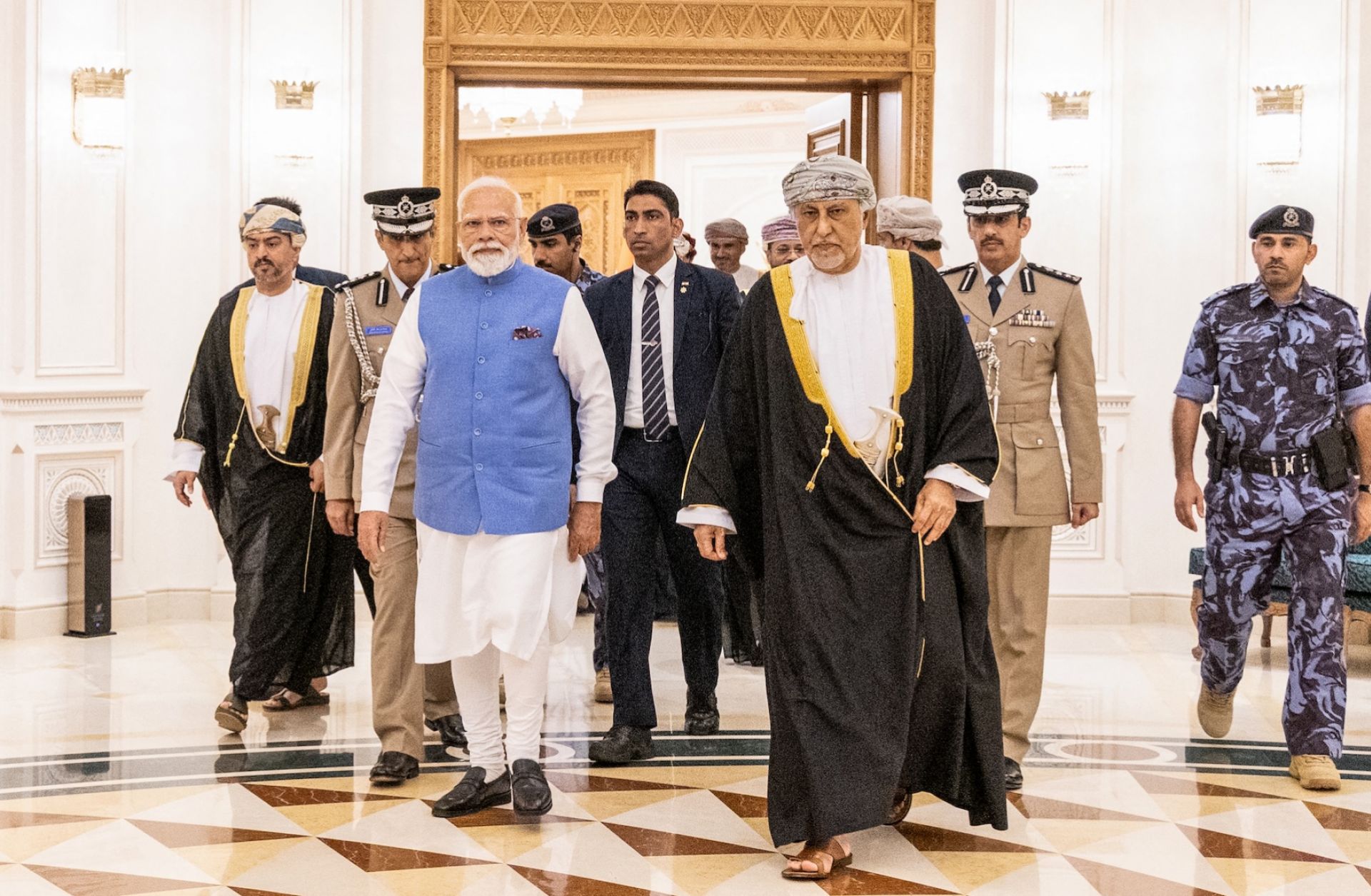
India's recent deals with New Zealand and Oman signal modest efforts to expand trade, investment and labor mobility, but various constraints will limit their impact as India struggles to reach larger agreements with partners like the United States, European Union and Gulf Cooperation Council. On Dec. 22, India and New Zealand announced that, after nine months of negotiations, they had reached a free trade agreement (FTA) to reduce tariffs, improve labor mobility and expand trade of goods and services and investment. Signing is expected in the first half of 2026. The announcement of the FTA came days after India and Oman on Dec. 18 signed a comprehensive economic partnership agreement (CEPA).
READ MORESituation ReportDec 18, 2025 | 21:08 GMT
India, Oman: Governments Sign Comprehensive Economic Partnership Agreement
During Prime Minister Narendra Modi's visit to Oman, India signed a comprehensive economic partnership agreement to strengthen bilateral trade and investment, Reuters reported on Dec. 18.
READ MORESituation ReportDec 9, 2025 | 16:46 GMT
Saudi Arabia, Qatar: Governments Ink Deal To Link Capitals via High-Speed Rail
Saudi Crown Prince Mohammed bin Salman and Qatari Emir Sheikh Tamim bin Hamad al-Thani signed an agreement to build a 785 kilometer (488 mile) high-speed rail line between Riyadh and Doha over the next six years, al Jazeera reported on Dec. 8.
READ MORESituation ReportNov 18, 2025 | 20:19 GMT
U.S., Saudi Arabia: Saudi Crown Prince Meets With President Trump
Saudi Crown Prince Mohammed bin Salman met with U.S. President Donald Trump in Washington, D.C., pledged to invest $1 trillion in the United States and reportedly finalized a defense deal, while the United States plans to approve the sales of advanced artificial intelligence chips, The Guardian reported on Nov. 18.
READ MOREAssessmentsOct 3, 2025 | 20:23 GMT

Trump's Security Guarantees for Qatar Unlikely To Offer Enough Reassurance
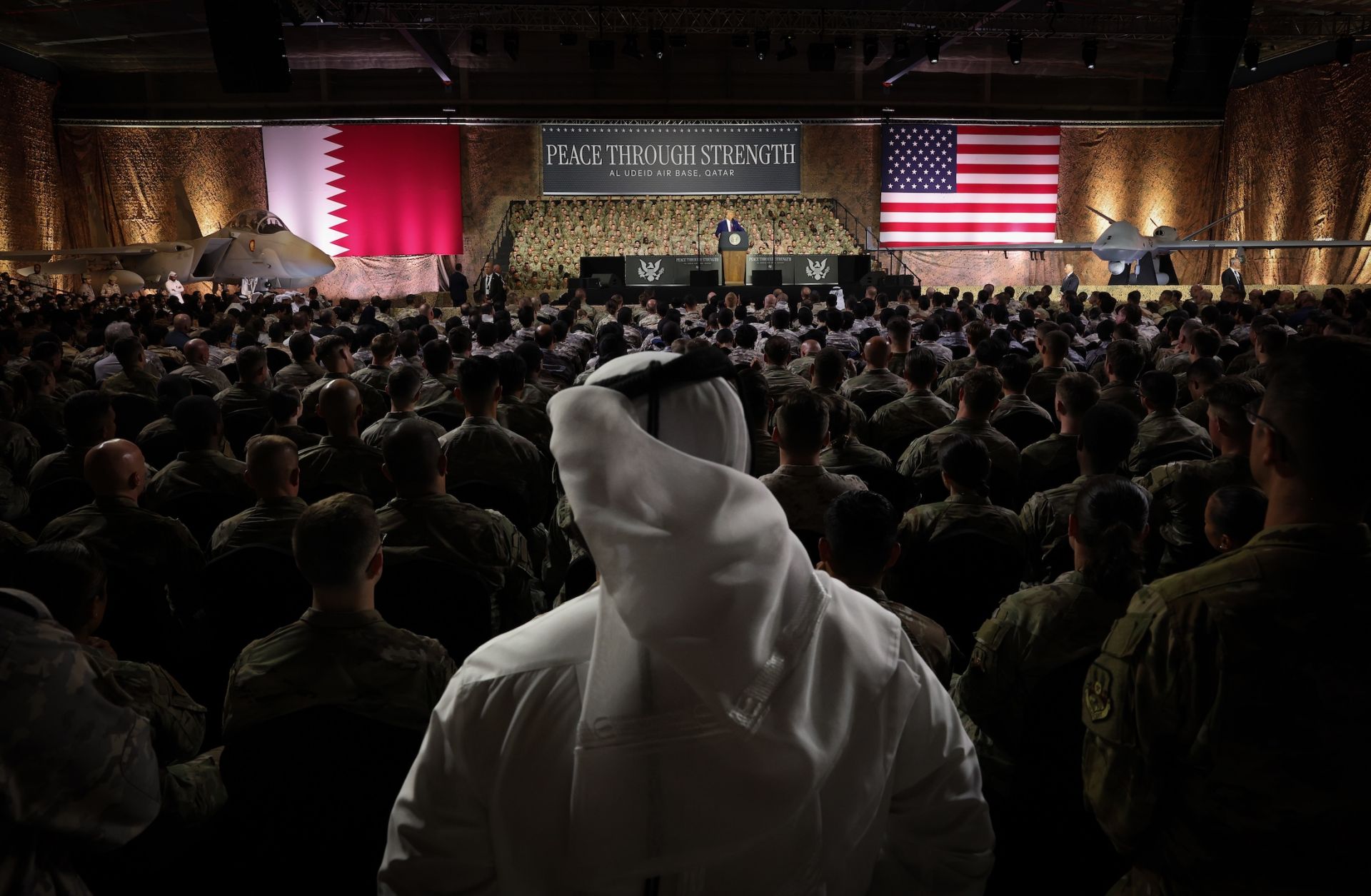
The United States' move to grant Qatar unprecedented security guarantees will deter future Israeli attacks on the country, but it is unlikely to deter Iranian aggression; it will also prompt other Gulf states to demand similar commitments, while ultimately doing little to halt their long-term efforts to diversify security partners. On Oct. 1, the White House announced that U.S. President Donald Trump had signed an executive order, dated two days earlier, to provide Qatar with an upgraded U.S. security commitment. The directive, formally titled ''Assuring the Security of the State of Qatar,'' states that any armed attack on Qatar's territory, sovereignty or critical infrastructure will be treated as a threat to U.S. peace and security, and vows that Washington would respond to such an attack with ''lawful and appropriate measures,'' including diplomatic, economic and, if necessary, military action. The directive also requires joint contingency planning between U.S. and Qatari authorities
READ MORESituation ReportOct 1, 2025 | 14:52 GMT

U.S., Qatar: U.S. Issues Executive Order To Re-Guarantee Qatari Security
U.S. President Donald Trump signed an executive order reaffirming the United States' commitment to Qatar's security on Sept. 29, publishing it on Oct. 1.
READ MORESituation ReportSep 19, 2025 | 15:27 GMT
Pakistan, Saudi Arabia: Pakistan Says Saudi Arabia Is Under Its Nuclear Umbrella
Pakistan's Defense Minister Khawaja Mohammad Asif said the country's nuclear arsenal would be "made available" to Saudi Arabia under their new defense pact, the first confirmation that Pakistan's nuclear weapons would be included as part of the agreement that was signed on Sept. 18.
READ MOREAssessmentsSep 18, 2025 | 15:17 GMT

Israeli Strike on Qatar Prompts GCC States To Question Future of Regional Security
Israel's Sept. 9 attack on Qatar will spur unified rhetoric among Gulf Cooperation Council (GCC) countries but is unlikely to produce real defense cooperation. It will also curb prospects for Saudi-Israel normalization and a regional missile shield and prompt GCC states to diversify their weapons systems, though they will remain heavily reliant on the United States. On Sept. 14 and 15, Qatar hosted an emergency Arab-Islamic summit to discuss Israel's Sept. 9 attack on Hamas leadership in Doha. At the summit, the GCC members pledged to "activate a joint defense mechanism." The GCC's Unified Military Command is expected to convene soon in Doha to plan to enhance the GCC's deterrent capabilities. While the specifics of the joint defense mechanism are unclear, the GCC's stated stance is that an attack on one member is an attack on the broader GCC. The summit also produced a joint statement condemning the Israeli attack
READ MOREAssessmentsSep 12, 2025 | 19:44 GMT

The Regional Implications of Israel's Strikes in Qatar
Israel's airstrikes in Qatar will likely harden the stances of Iranian-backed groups, keep normalization with Saudi Arabia off the table and drive more assertive postures from other regional states. In the past few days, Qatari authorities, other countries in the region, European states and even the United States -- reportedly informed of the attack only as it was taking place -- all condemned Israel’s Sept. 9 airstrikes in Doha. The Israeli airstrikes in Doha did not succeed in killing the Hamas leaders Israel was targeting, though six others were killed. The incident was the first Israeli attack on a close U.S. ally in modern times. It was all the more significant given Qatar's designation as a major non-NATO ally of the United States, a status that signifies the closest security ties Washington can have with a foreign country that is not a NATO member.
READ MORESituation ReportSep 10, 2025 | 18:54 GMT
Israel: International Condemnation Follows Israeli Airstrike on Qatar
Following Israel's strike on Doha, Qatar, on Sept. 9, the European Union, the United States, the Gulf Cooperation Council, Saudi Arabia, the United Arab Emirates, Turkey, Kuwait, Jordan, Iran, Egypt, Iraq and others criticized the attack, Al Jazeera reported the same day.
READ MOREAssessmentsAug 19, 2025 | 19:27 GMT

Solid Fundamentals Shield GCC Economies From Global Volatility
Gulf Arab states' solid macroeconomic and financial fundamentals will keep the region resilient in the face of global economic uncertainty, including a potential sustained drop in oil prices over the next few quarters. According to the International Monetary Fund (IMF), the members of the Gulf Cooperation Council (GCC) are expected to sustain solid economic growth over the next five years against the backdrop of low inflation and strong current account and external financial positions. Oil prices and production levels, particularly in the case of swing producers like Saudi Arabia and the United Arab Emirates, will continue to strongly contribute to economic growth, despite Gulf states' decades-long and ongoing efforts to diversify away from oil and gas production. Across the region, ongoing structural reform has helped increase the share of the non-hydrocarbon economy, though Kuwait, Qatar and Saudi Arabia remain highly reliant on oil and gas exports. By comparison, Bahrain and
READ MOREOn GeopoliticsJul 16, 2025 | 18:10 GMT

Assessing the Regional Impact of the Israel-Iran War, Part 2
With the Israel-Iran war now paused with a fragile ceasefire, Gulf states will scramble to exert diplomatic pressure to prevent another round that would prove more costly and escalatory, as these countries understand that a weakened Iran will not bring regional stability. Instead, the Middle East faces a continuation of decades of instability, with Israel's increasingly militarily heavy-handed and diplomatically disengaged policies now at the forefront.
READ MOREAssessmentsJul 4, 2025 | 14:00 GMT

Geopolitics of Trade: Gulf Arab States Balance Diversification With Enduring U.S. Ties
Over the next decade, Gulf Arab states will continue expanding their oil and gas exports to emerging markets, particularly in Asia, while these countries seek alternative export markets to the United States amid tariff uncertainty; but despite these shifting trade dynamics, Gulf Arab countries will maintain strong military and technological ties with the United States. The oil-rich countries in the Gulf Cooperation Council, or GCC (Saudi Arabia, Kuwait, Qatar, the United Arab Emirates, Bahrain and Oman) are set to benefit from changing global trade partners. While hydrocarbon products currently comprise most of GCC nations' global exports, a significant portion of their trade growth is expected to come from non-hydrocarbon sectors in the coming years. This shift is part of their long-term economic and trade diversification strategies (including Saudi Arabia's Vision 2030, Abu Dhabi Economic Vision 2030 in the United Arab Emirates and Qatar's National Vision 2030), which are all aimed
READ MOREQuarterly ForecastsJun 30, 2025 | 00:00 GMT

2025 Third-Quarter Forecast
The third quarter of 2025 will be defined by disruptive trade policies fueling supply chain volatility and the persistent risk of escalation in major conflicts.
READ MORESituation ReportJun 23, 2025 | 15:15 GMT
Oman: Personal Income Tax Marks First in GCC
In a June 22 royal decree, Oman's Sultan Haitham bin Tariq al Said ratified a 5% income tax on residents in Oman earning over 42,000 rials ($109,000), Bloomberg reported the next day.
READ MOREAssessmentsJun 16, 2025 | 21:27 GMT

The Geopolitics of Trade: U.S. Tariffs Give Impetus to ASEAN Trade Diversification
While the Association of Southeast Asian Nations (ASEAN) is attempting to use global trade tensions to strengthen economic integration, the bloc's diversity will limit the extent of this effort even as, over time, common concern about export dependencies on the United States will drive ASEAN members to seek alternative trading partners. On May 26-27, Malaysia, as the 2025 ASEAN chair, hosted a series of summits that underscored ASEAN's broad dual-track initiatives to bolster intra-bloc trade and trade diversification. The 46th ASEAN Summit, convened on May 26, brought together leaders from the ten-member bloc and produced a new five-year strategic plan aimed at deepening economic integration among member states, with goals such as further harmonizing trade standards, enhancing financial integration and promoting sustainable economic practices. Leaders also committed to finalizing an upgraded ASEAN Trade in Goods Agreement by October, which aims to further liberalize regional markets and boost intra-ASEAN trade beyond
READ MORESituation ReportJun 13, 2025 | 16:49 GMT
GCC, Israel: GCC Countries Condemn Israeli Attacks on Iran
Gulf Arab states condemned Israel's June 13 attack on Iranian nuclear and military targets in a series of official statements, Al Jazeera reported on June 13.
READ MORESituation ReportMay 27, 2025 | 19:47 GMT
Asia-Pacific, MENA: ASEAN-GCC-China Inaugural Summit Marks Deeper Economic Alignment
Malaysia hosted the inaugural Association of Southeast Asian Nations-Gulf Cooperation Council-China trilateral summit in Kuala Lumpur, Malaysia Channel News Asia reported on May 27.
READ MOREAssessmentsMay 24, 2025 | 14:00 GMT

The Weekly Rundown: Trans-Atlantic Trade Talks Intensify, Malaysia Hosts Two Summits
A look at what the coming week will bring -- and a list of recommended RANE articles from the week that was.
READ MORE